Fes vs Marrakech: Which City is Better for Your Morocco Trip? (2026 Guide)
Table of Contents
Quick Answer: If you are visiting Morocco for the first time and want high-energy street life, luxury resort comfort, accessible sightseeing, and a vibrant nightlife scene, choose Marrakech. If you crave raw medieval history, traditional artisan culture, world-class slow-cooked gastronomy, and an immersive, unpolished cultural experience, choose Fes. If you have 8 days or more, the best decision is to visit both via a private desert road trip.
The debate over Fes vs. Marrakech is the defining dilemma of Moroccan travel planning. They are the two most legendary Imperial Cities in the Kingdom, yet they represent two completely different dimensions of the North African experience.
Marrakech is the extrovert: sun-drenched, theatrical, heavily tailored to international travelers, and relentlessly energetic. Fes is the introvert: ancient, complex, intensely traditional, deeply intellectual, and fiercely protective of its ancient secrets.
Choosing the wrong base can leave you feeling either overwhelmed by chaos or underwhelmed by pace. In this comprehensive guide, we break down both destinations across history, daily budget, navigation, atmosphere, and lifestyle to help you decide which city deserves your itinerary.
The Tale of the Tape: Quick Comparison Fes vs. Marrakech
Metric
Marrakech (The Red City)
Fes (The Spiritual Capital)
Atmosphere
Fast, glamorous, sensory-heavy
Slow, historic, contemplative
Medina Navigation
Moderate (wide thoroughfares, open plazas)
Hard (9,000+ narrow dead-end alleys)
Accommodation
High-end boutique riads, luxury palmeraie resorts
Authentic medieval palace riads
Food Scene
Trendy rooftop dining, fusion, street food
Traditional labor-intensive Fassi cuisine
Average Daily Budget
Higher (priced for Western weekend tourism)
Lower (roughly 30% more value per dollar)
Primary Vibe
Exotic vacation, shopping, nightlife
Time-travel immersion, photography, culture
Deep Dive into Fes — The Untamed Medieval Soul
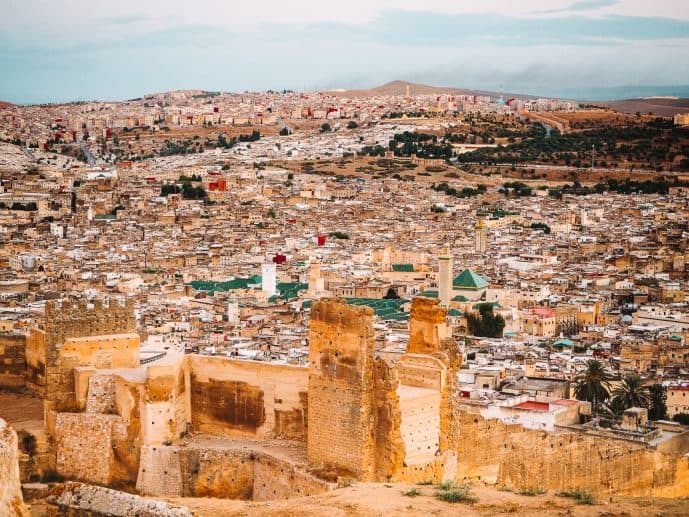
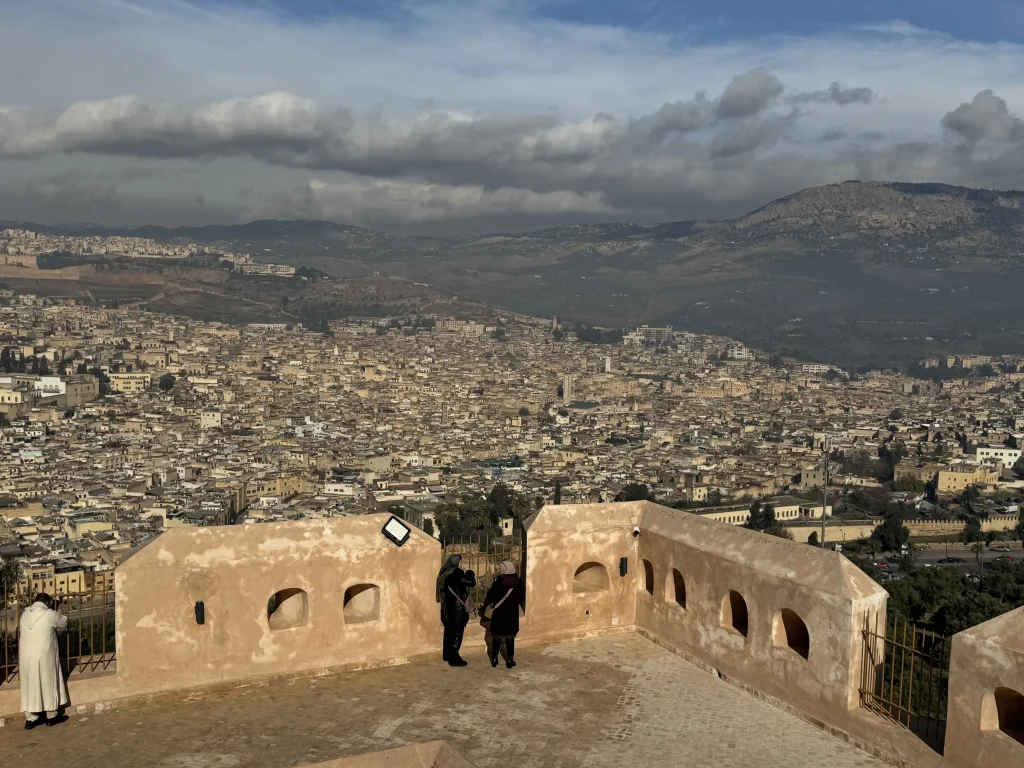
Founded in 789 AD, Fes is the oldest of Morocco’s imperial capitals. Unlike Marrakech, which has adapted its urban flow to accommodate global tourism, Fes demands that the traveler adapt to it. It is a working, living relic of the Middle Ages.
Fes vs Marrakech , Deep Dive into Fes — The Untamed Medieval Soul
1. Fes el-Bali: Navigating the World’s Largest Car-Free Maze
The historic core of the city is Fes el-Bali, a sprawling UNESCO World Heritage site containing over 9,000 narrow alleyways, tunnels, and covered souks. Because the geometry of the city was laid down a millennium before the invention of the automobile, wheeled traffic is physically impossible. Everything moving in and out of the medina—from sacks of flour to construction bricks—is carried by donkeys, mules, and handcarts.
Entering Fes el-Bali is an absolute sensory reset. Standard satellite navigation apps frequently lose signal between the towering, windowless stone walls. The alleys are shaded, cool, and intentionally labyrinthine. You do not visit Fes with a rigid checklist of tourist sites; you visit Fes to surrender to the disorientation.
2. The Spiritual and Intellectual Epicenter
Fes wears its academic history proudly. Deep inside the medina sits the University of Al-Qarawiyyin, founded in 859 AD by a woman named Fatima al-Fihriya. Recognized by UNESCO and the Guinness World Records as the oldest continuously operating university on Earth, it transformed Fes into the theological and intellectual capital of the western Islamic world.
Just minutes away stand the Bou Inania and Al-Attarine Medersas. These 14th-century residential colleges are masterpieces of Marinid architecture. Visitors can step inside quiet courtyards to examine the holy trinity of Moroccan design: hand-carved Atlas cedar wood, intricate stucco calligraphy, and hand-cut Zellige geometric tilework.
Al Qarawiyyin University of Fes
3. The Cradle of Master Craftsmanship
While Marrakech is a fantastic place to buy Moroccan crafts, Fes is the place where they are actually made. The city remains organized by medieval trade guilds.
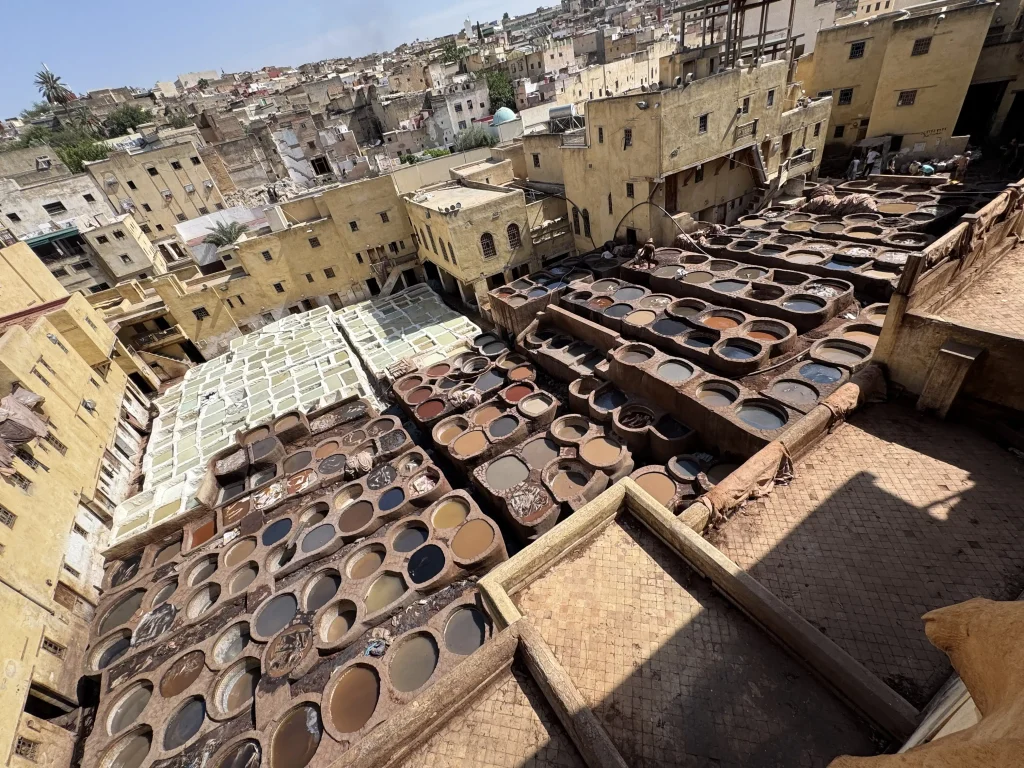
The Chouara Tanneries: Operating almost identically to how they did in the 11th century, these massive stone honeycomb vessels are filled with natural dyes—poppy flower for red, saffron for yellow, indigo for blue, and mint for green. Watching the tanners work the hides waist-deep in the vats is one of the most raw, unfiltered sights left in modern travel.
Place Seffarine: You will hear this square before you see it. It is the home of the coppersmiths, where craftsmen sit on the stone floor rhythmically hammering massive cauldrons, tea trays, and cooking pots over open charcoal fires.
The Potters’ Quarter: Located just outside the ancient walls, this is where the iconic Fassi cobalt-blue ceramics are hand-thrown on foot-powered wheels and painted with brushes made from donkey hair.
4. Gastronomy: The Birthplace of Moroccan Haute Cuisine
Ask any professional Moroccan chef where the country’s finest food originates, and they will point to Fes. Because the city hosted the royal court and wealthy merchant families for centuries, its kitchen culture developed a level of labor-intensive complexity that casual street food cannot match.
Fes is the undisputed birthplace of the Pastilla—a marvelous savory-sweet pie made of paper-thin warqa pastry dough, shredded spiced poultry, crushed toasted almonds, cinnamon, and powdered sugar. It is also the home of the authentic sweet prune and lamb tajine, and Khlii (sun-dried spiced beef preserved in rendered animal fat). Dining in a traditional Fassi riad is a slow, multi-course ceremonial event.
Pastilla food best in morocco
Deep Dive into Marrakech — The Electrifying Pulse of the South
If Fes is defined by stone, shadow, and antiquity, Marrakech is defined by terracotta, sunlight, and palm groves. Sitting on a dry plain at the foot of the snow-capped High Atlas Mountains, Marrakech has historically served as the great trading trading post where the Berber tribes of the mountains met the caravan merchants of the Sahara.
1. Jemaa el-Fnaa: The Open-Air Theater That Never Sleeps
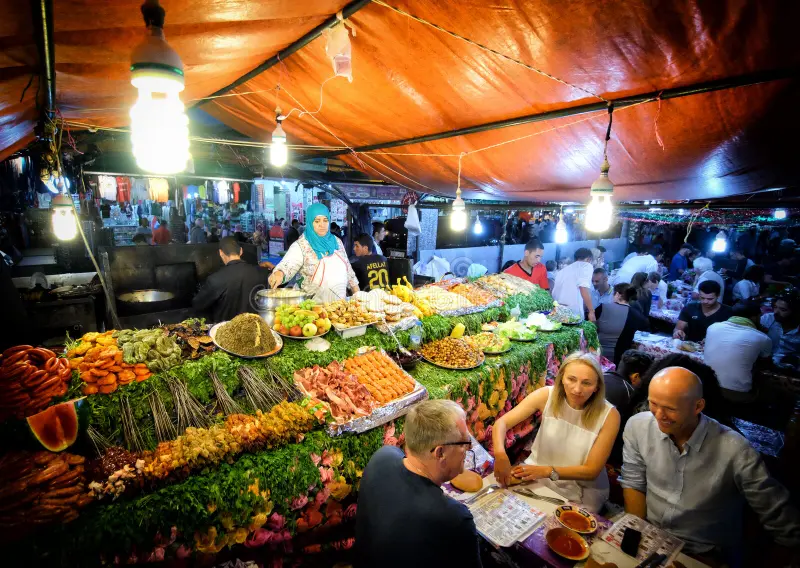
Everything in Marrakech pulls toward one gravitational center: Jemaa el-Fnaa. By day, this massive public square is a sun-baked plaza occupied by fresh orange juice carts, traditional water sellers in brass-studded costumes, and henna artists.
As dusk approaches, the square undergoes a miraculous transformation. Dozens of mobile restaurant carts are wheeled into the center, firing up industrial grills for lamb skewers, merguez sausages, and roasted sheep heads. Around the dining stalls, massive circles of spectators form around Gnaoua drum troupes, Amazigh storytellers, acrobats, and street magicians. It is loud, smoky, chaotic, and entirely intoxicating.
Jemaa el-Fnaa: The Open-Air Theater That Never Sleeps
2. Palaces of the Red City
Marrakech’s monuments reflect the immense wealth of the Almoravid, Almohad, and Saadian dynasties.
The Koutoubia Mosque: The 77-meter sandstone minaret acts as the city’s compass needle; its 12th-century architectural ratios were so perfect they were used as the direct blueprint for the Giralda in Seville, Spain.
Bahia Palace: A sprawling late-19th-century complex of painted ceilings, stained-glass arches, and citrus-filled courtyards built for the Grand Vizier Bou Ahmed.
The Saadian Tombs: A lavish royal necropolis featuring columns of pure imported Italian Carrara marble, which was walled off by a rival Sultan and left forgotten by the outside world until aerial mapping rediscovered it in 1917.
3. Green Sanctuaries and the Contemporary Art Scene
Marrakech understood decades ago that travelers eventually need a sanctuary from the relentless stimulation of the souks. The city is famous for its historic and modern botanical retreats. The most famous is the Majorelle Garden, a surrealist landscape of towering bamboo, giant cacti, and vibrant cobalt-blue art deco architecture rescued from demolition by French designer Yves Saint Laurent.
Beyond the ancient 12th-century ramparts lies Guéliz, the European-style district built during the French Protectorate. Here, the donkeys and pushcarts disappear entirely. Guéliz is home to wide boulevards, contemporary African art museums, chic concept stores, French bakeries, and high-end rooftop cocktail bars.
The Koutoubia Mosque
Head-to-Head: The Practical Reality Check
To help you make an objective choice, let us test both destinations against four common travel frictions:
1. Ease of Navigation and Getting Lost
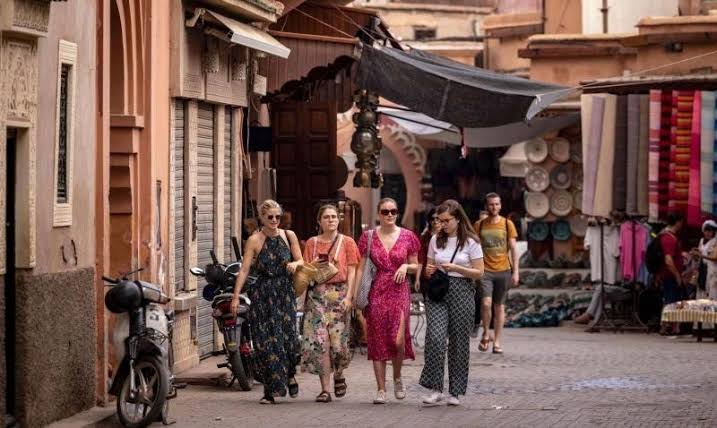
Winner: Marrakech. While the Marrakech medina is certainly a maze, it features wider central thoroughfares, clear signage leading back to the main square, and frequent open plazas. If you get completely disoriented, a five-minute walk in any direction will usually bring you to a city gate where you can hail a cab. In Fes, getting lost means hitting dead-ends deep inside a valley bowl; navigating it efficiently requires hiring an official local guide or possessing remarkable spatial awareness.
2. Budget and Purchasing Power
Winner: Fes. Because Marrakech is a darling of the European weekend-break flight routes, prices for boutique accommodations, tourist-oriented restaurants, and private transport have inflated substantially. In Fes, your travel budget stretches much further. A stay in a meticulously restored 18th-century merchant palace in Fes routinely costs the same as a standard modern hotel room in Marrakech. Leather goods, hand-knotted rugs, and metalwork are also noticeably cheaper at the source.
3. The Shopkeeper “Hassle” Dynamic
Winner: Fes. Shopkeepers in Marrakech are world-class salesmen; they are theatrical, persistent, and occasionally aggressive in their pursuit of a sale. In Fes, the commercial culture is rooted in traditional Andalusian reserve. While merchants certainly want your business, there is an inherent dignity to the interactions. If you offer a polite “La, Shukran” (No, thank you) in Fes, shopkeepers generally allow you to continue your walk in peace.
4. Day Trip Gateways
It is a Tie (Depending on your interests).
From Marrakech: You have immediate access to the hiking trails of the Ourika Valley, the dramatic rocky expanses of the Agafay Desert, the breezy coastal windsurfing hub of Essaouira, and the dramatic Tizi n’Tichka mountain pass.
From Fes: You are perfectly positioned to explore the remarkably preserved Roman ruins of Volubilis, the imperial monuments of Meknes, the alpine cedar forests of Ifrane, and the world-famous blue mountain town of Chefchaouen.
merzouga to fez tour
The Verdict: Matching the City to Your Travel Persona
Do not choose a destination based on which city is abstractly “better”—choose based on who you are as a traveler:
Choose Fes if you are…
The Cultural Purist: You want to witness a traditional way of life that hasn’t sanitized itself for social media algorithms.
The Photography Enthusiast: You are inspired by deep shadows, ancient crumbling textures, and candid artisan portraits.
The Introverted Traveler: You prefer waking up to the sound of birds in a quiet tiled courtyard over late-night rooftop DJ sets.
The Culinary Traveler: You plan your vacations around tasting historically authentic, complex regional cuisine.
Choose Marrakech if you are…
The First-Time Visitor to Africa: You want an exciting, exotic cultural experience backed up by frictionless tourist infrastructure and widespread English fluency.
The Boutique Hotel Lover: You want to stay in world-renowned design riads and spend your afternoons lounging by palm-shaded swimming pools.
The Social Traveler: You want lively group dinners, sunset drinks on aesthetic rooftops, and a high-energy urban atmosphere.
The Ultimate Hack: Why Choose When You Can Combine?
If your vacation schedule allows for 8 to 12 days in Morocco, forcing yourself to pick one city over the other is a strategic mistake. The ultimate Moroccan travel narrative is experiencing the dramatic geographical and cultural transition between the two.
The legendary Imperial Desert Corridor is widely considered one of the world’s greatest overland road trips:
Begin with 3 nights in Fes, immersing yourself in medieval history and artisan workshops.
Drive south through the cedar forests of the Middle Atlas Mountains into the Merzouga Sahara Desert. Spend a night riding camels into the golden dunes of Erg Chebbi and sleeping under the Milky Way in a luxury Berber tent.
Travel westward through the towering rock walls of the Todra Gorges and the ancient mud-brick kasbahs of Ait Benhaddou.
Cross the dramatic peaks of the High Atlas Mountains to finish your trip with 3 nights of high-energy shopping and dining in Marrakech.
Trustindex verifies that the original source of the review is Google.
⭐⭐⭐⭐⭐
"Une expérience incroyable avec morocco fez tours ! J'ai participé à plusieurs excursions organisées par cette agence, et chaque fois, tout était parfaitement orchestré. Les guides sont passionnés et connaissent parfaitement la région, ce qui rend chaque sortie enrichissante et immersive. Que ce soit pour des randonnées en montagne ou des visites culturelles, chaque détail est soigneusement planifié. Je recommande fortement leurs services à tous ceux qui souhaitent découvrir des lieux exceptionnels !"
Posted on Google
Abderrahim Dahmani
Trustindex verifies that the original source of the review is Google.
i had a lot of fun with this company .i recommend it
Posted on Google
Kamar Travel
Trustindex verifies that the original source of the review is Google.
I had a lot of fun with this company. I recommend it.
Posted on Google
issam ben
Trustindex verifies that the original source of the review is Google.
Très satisfait
Posted on Google
brown eva
Trustindex verifies that the original source of the review is Google.
perfect service highly recommended
Posted on Google
ben issa
Trustindex verifies that the original source of the review is Google.
The service was awesome
Posted on Google
younes amin
Trustindex verifies that the original source of the review is Google.
I like fez
Posted on Google
pedro gallart santos
Trustindex verifies that the original source of the review is Google.
Ciudad preciosa, sus habitantes son muy simpáticos y amables, la comida es genial.
Frequently Asked Questions (FAQ)
Can I visit Fes as a day trip from Marrakech?
No. The overland driving distance between the two cities is roughly 530 kilometers, requiring 8 to 9 hours of continuous driving or train travel. While there are short 60-minute domestic flights connecting the two regional airports, attempting to experience Fes in a rushed afternoon completely defeats the purpose of the city, which rewards slow, patient exploration.
Which city is safer for solo female travelers?
Both cities are statistically very safe regarding violent crime against tourists. However, solo female travelers frequently report feeling more relaxed in Fes. Because Marrakech draws massive tourist crowds, street catcalling and aggressive touting are more prevalent. In Fes, conservative traditional social norms still dominate street life, resulting in a generally more hands-off environment.
Is Fes or Marrakech better for buying authentic Moroccan rugs?
Fes is generally superior for traditional rural and Middle Atlas tribal rugs (such as Beni Ourain or Zemmour weaves) because the city acts as the direct regional market hub for the surrounding mountain weavers. Marrakech offers a massive selection of chemically washed or modernized rugs tailored specifically to Western interior design trends, but the retail markup is significantly higher.
Which city has better weather?
Marrakech sits further south on a low, inland plain; it offers brilliantly warm, sunny winter days (18°C–22°C) but experiences extreme summer heat in July and August, where temperatures routinely exceed 42°C. Fes sits at a higher elevation closer to the northern mountain ranges; its winters are genuinely crisp and rainy (dropping near 3°C at night), but its spring (April–May) and autumn (October–November) seasons offer absolutely perfect travel weather.
Are credit cards widely accepted in both medinas?
In the modern districts of Marrakech (Guéliz) and high-end hotels, credit cards are accepted everywhere. However, inside the ancient medinas of both Fes and Marrakech, cash remains king. While large carpet shops and luxury riads accept cards (often adding a 3% to 5% surcharge), street food stalls, entrance fees for historical monuments, small souvenir stands, and local taxis operate strictly on Moroccan Dirhams (MAD).