Fes is Morocco’s oldest imperial city, and it shows in ways both obvious and easy to miss. The Medina gets most of the attention. The food markets, back streets, and hillside monuments don’t, which is why they’re worth your time.
A combined Fes Food Tourand monuments day works because the two halves complement each other without competing. Morning is better for walking the Medina before it fills up; the viewpoints are best in late afternoon when the light hits the rooftops from the side.
Fes Food Tour: Discover Authentic Moroccan Street Food
Fes Food Tour
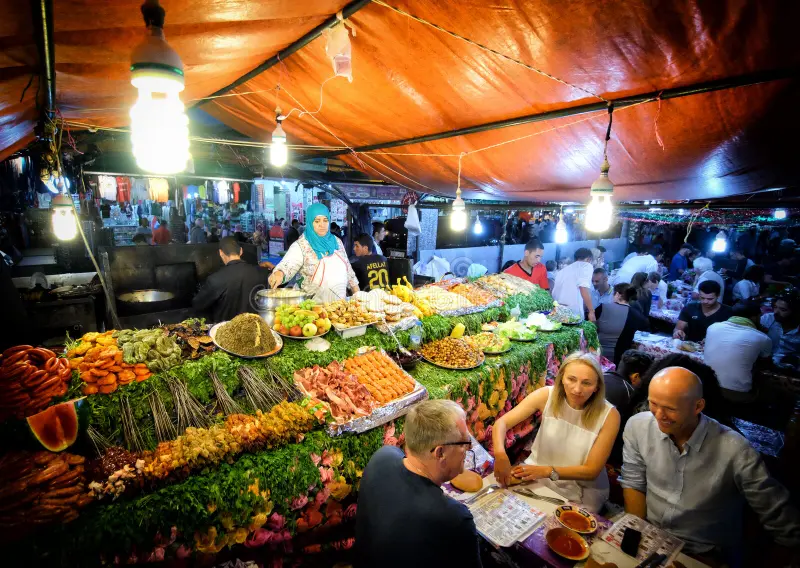
Moroccan street food has a loose internal logic that makes more sense once you’ve tried it in sequence. Warm bread from a wood-fired neighborhood bakery is a reasonable start. Then Bissara, a thick fava bean soup with olive oil and cumin that most locals eat for breakfast. Harira shows up year-round but feels right in the morning too, a tomato and lentil base with enough spice to wake you up. Msemen is a flaky flatbread, pan-fried, served savory or with honey depending on the stall. Sfenj are fresh doughnuts, best eaten immediately. Pastries made with almonds, sesame, and orange blossom water come last, alongside mint tea.
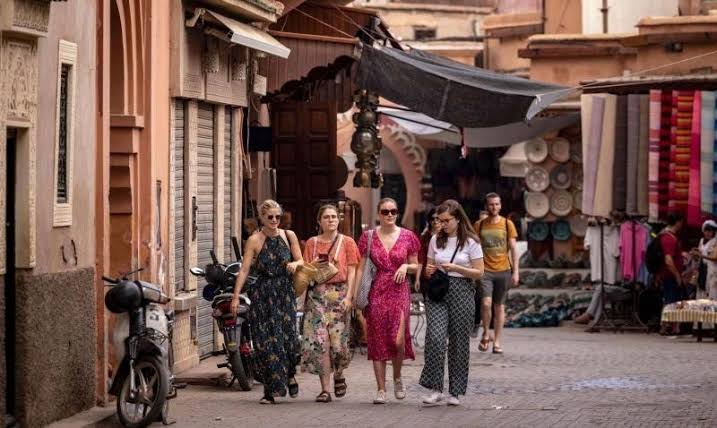
The markets that connect all of this are genuinely interesting to walk through during a Fes Food Tour. Spice merchants, olive vendors, small cheese sellers, and family bakeries that run all day create an authentic atmosphere. None of it is designed for tourists, which is most of why it works.
Fes Food Tour & Outside Monuments: Discover the Best Landmarks Beyond the Medina
The Royal Palace doesn’t admit visitors, but the gates are worth seeing anyway. Handcrafted bronze doors, detailed tilework, and cedar carvings that took years to complete. The Jewish Quarter nearby has distinctive balconied architecture from a neighborhood that housed one of Morocco’s oldest Jewish communities.
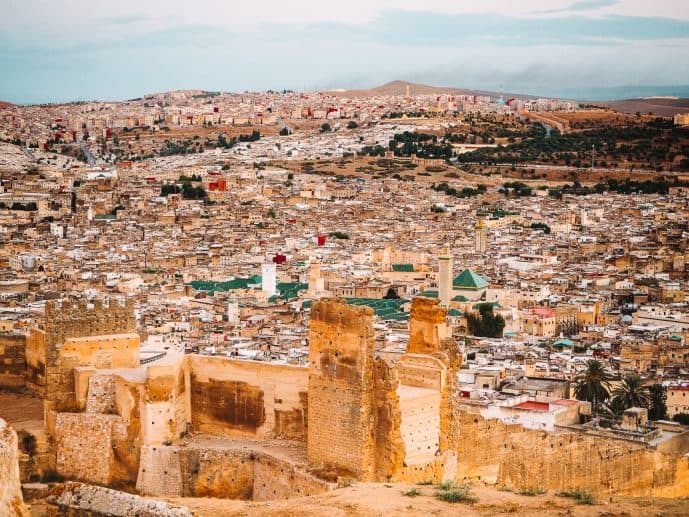
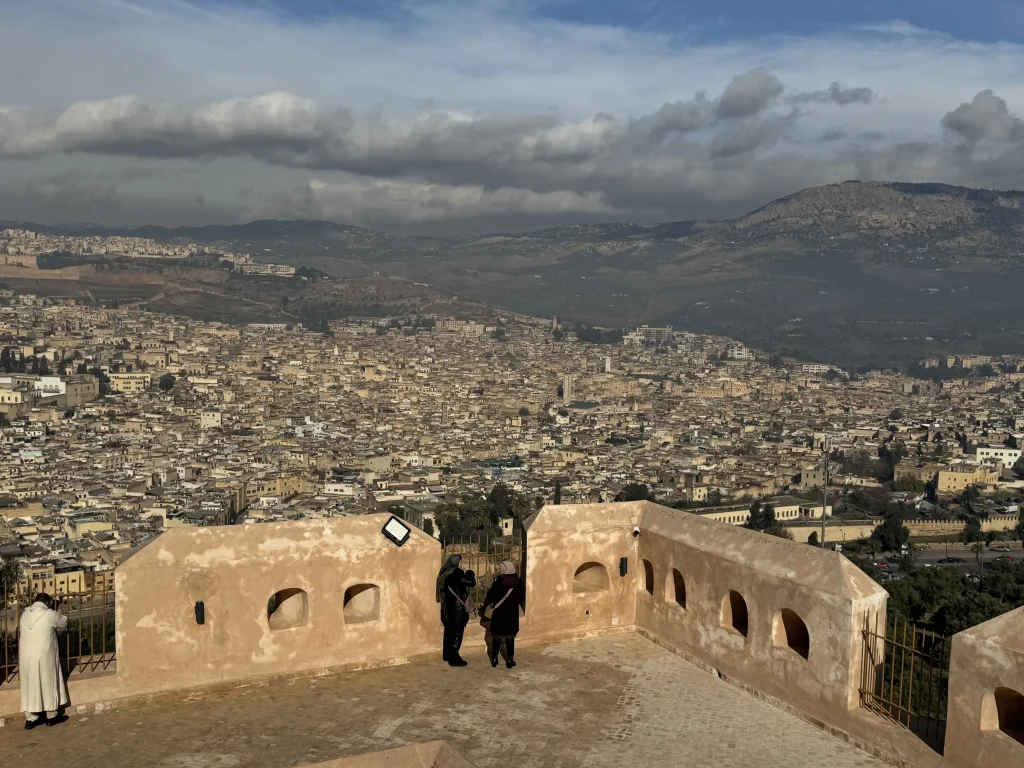
Borj Nord is a 16th-century fortress on the hill above the Medina and the best elevated viewpoint in the city. The view down into the old city from there is the one worth having. Borj Sud, across the valley, gives you the other angle and tends to be quieter.
The pottery workshops are a genuine stop rather than a checkbox. Fes ceramics have a specific look, and watching the process from raw clay to painted tile makes it clear that this isn’t something you can rush or automate.
The Marinid Tombs on the hillside above the city are mostly ruins, but people go for the view, especially near sunset.
Plan Your Fes Food Tour: Practical Travel Tips
A full Fes Food Tour combined with the outside monuments experience typically runs six to eight hours. Wear shoes that can handle uneven cobblestones for hours at a stretch. Bring cash. Dress modestly near historical sites. Spring and autumn are considerably more comfortable than summer, when the Medina heat becomes its own challenge.
As the sun sets over the ancient clay rooftops of Fes, casting a warm golden glow across the labyrinthine medina, the lingering tastes of the day settle into something far deeper than just a full stomach. Booking a fes food tour is never just about the meals; it is an immersive, sensory doorway into the heart of Moroccan history. From the sweet, nutty crunch of freshly baked pastilla to the deep, slow-cooked comfort of a traditional lamb tagine, every bite tells a story of centuries-old traditions.
Wandering through the bustling souks, guided by the aroma of cumin, orange blossom, and roasting meats, you don’t just observe the city—you experience its rhythm. A guided fes food tour connects you directly with the local bakers tending communal wood-fired ovens and the spice masters who blend their ingredients like fine art.
Ultimately, joining a fes food tour leaves you with much more than a list of new favorite dishes. It gifts you a profound appreciation for the legendary hospitality of the Fassi people. Long after the flavors fade, the warmth of a shared glass of mint tea will remain with you.